


a and b: (1) Storage for
them exists only while the subroutine is active
(while it has not yet returned control to its caller).
(2) Storage for them is on the stack.
prompt1 and prompt2 are not variables.
(1) Storage for them exists while the program is in
main storage.
(2) Storage is in the data section of memory.
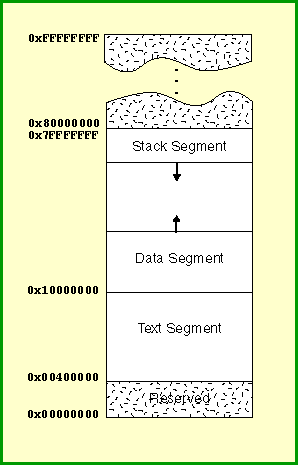
There are three places in memory where data may be placed:
.data in assembly language),
A subroutine other than main()
can have data in the .data section.
In high-level programming languages, such as C,
this type of storage is called static.
Variables whose storage is allocated on the run-time stack are (sometimes) called automatic variables. This is because their storage is "automatically" pushed and popped as a subroutine is entered and exited. Usually these are subroutine parameters and local variables.
A variable whose memory is located in the heap is called
a dynamic variable.
The heap is where memory for objects is found
(using the new operation in Java or C++).
In C dynamic memory is allocated using the malloc
operation (or similar).
Chapter 33 of these notes discusses the heap.
The heap is on top of the data segment. As dynamic variables are created it grows upward (towards the stack stack segment.)
(Review:) What happens if the stack and heap get larger and larger?